How does Helicobacter pylori survive in the stomach?
Overview
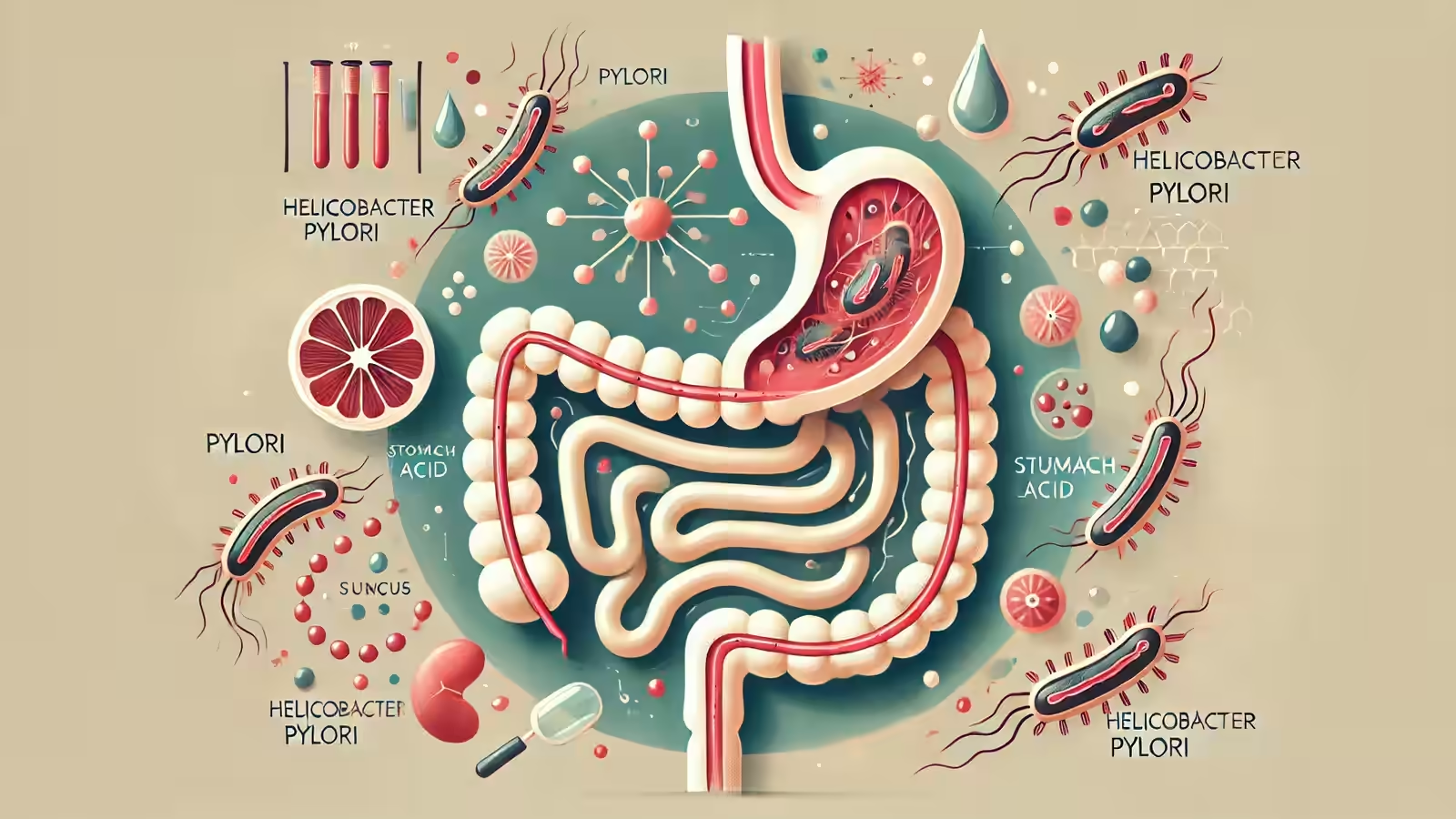
Helicobacter pylori is a bacterium that has found a way to survive in the stomach, despite its strong acids. This bacterium is common, and many people have it without even knowing. However, it can sometimes cause problems like stomach pain, ulcers, or other digestive issues. In the following sections, we provide an overview of how it manages to survive in such a tough environment and what this means for your health.
How does Helicobacter pylori survive in the stomach?
The stomach is very acidic, which helps break down food and kill harmful bacteria. But Helicobacter pylori has special tricks to protect itself and live comfortably in this harsh environment. Here’s how it does it:
1. Neutralizing stomach acid
H. pylori produces an enzyme called urease. This enzyme breaks down a substance called urea (naturally found in your stomach) into ammonia. Ammonia helps to neutralize the acid around the bacterium, creating a safe bubble where it can survive.
- Why this matters: The ammonia acts like a shield, protecting H. pylori from the stomach’s strong acid.
- Would H. pylori be able to survive in the stomach without urea? Without urea, H. pylori wouldn’t be able to produce ammonia, making it much harder for the bacterium to survive the stomach’s acidity.
2. Moving through stomach mucus
The stomach has a thick mucus layer that protects its lining from acid. H. pylori uses its tail-like structures, called flagella, to swim through this mucus and find a spot to settle.
- How it works: The bacterium moves toward areas where the acid is less strong, like near the stomach lining.
3. Sticking to the stomach lining
Once H. pylori reaches the stomach lining, it sticks to the cells using special proteins. This helps it avoid being washed away by food or stomach movements.
- Why it’s important: Staying attached allows H. pylori to survive for a long time, even years.
4. Changing the mucus layer
H. pylori can thin the protective mucus layer of the stomach, making it easier for it to reach the stomach lining. It does this by releasing certain enzymes.
- Impact on you: This thinning can leave your stomach lining exposed to acid, which may cause irritation or ulcers.
5. Hiding from your immune system
H. pylori has ways to avoid being attacked by your immune system. It can reduce inflammation or confuse immune cells so they don’t attack it effectively.
- Why this helps the bacterium: This allows H. pylori to stay in the stomach for a long time without being eliminated.
How is H. pylori adapted to life in the stomach?
H. pylori’s adaptations include:
- Producing urease to neutralize acid.
- Using flagella to move to less acidic areas.
- Sticking to the stomach lining to avoid being swept away.
- Modifying the mucus layer for better survival.
- Avoiding detection by the immune system.
These strategies make it highly effective at surviving in the stomach.
How long can H. pylori live in the gut?
H. pylori can live in the gut for years, sometimes even decades. If untreated, it often stays in the stomach throughout a person’s life, especially if it doesn’t cause noticeable symptoms. This long-term survival is due to its ability to adapt and avoid the immune system.
Does H. pylori need oxygen to survive?
H. pylori is a microaerophilic bacterium, meaning it needs only a small amount of oxygen to survive. It cannot live in completely oxygen-free environments, but it thrives in the low-oxygen conditions of the stomach lining.
What does this mean for your health?
H. pylori can live in your stomach for years without causing symptoms. But in some cases, it can lead to problems like:
- Stomach pain or discomfort.
- Bloating or nausea.
- Peptic ulcers (sores in the stomach lining).
- In rare cases, it may increase the risk of stomach cancer.
If you have symptoms or have been diagnosed with H. pylori, your doctor may recommend treatment to remove the bacteria and help your stomach heal.
What can be done?
Understanding how H. pylori survives helps doctors develop better treatments. Some common options include:
- Antibiotics: These kill the bacteria.
- Acid-reducing medications: These lower stomach acid to help antibiotics work better and allow your stomach lining to heal.
- Diet changes: Avoiding spicy, acidic, or fatty foods may help reduce symptoms.
Conclusion
Helicobacter pylori is a tough bacterium that has adapted to survive in one of the harshest environments in your body. While it’s not always harmful, it can cause problems for some people. If you think you might have H. pylori or are experiencing stomach issues, talk to your doctor. With the right treatment, you can get relief and protect your stomach health.
